Profile
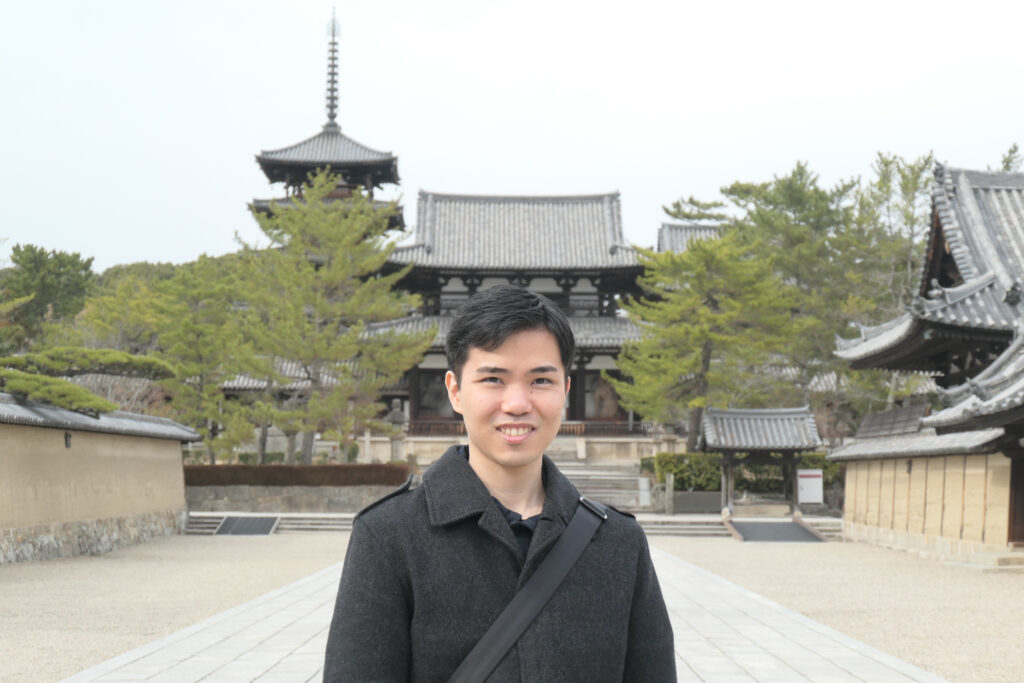
Daichi Shigemoto is an architectural historian whose research examines the transnational circulation of architectural knowledge and its role in shaping architectural modernity, with a particular focus on Japan’s exchanges with the West and other East Asian countries. His research builds on the premise that Japan historically occupied a dual position, both as an object observed by the West and as a subject observing other parts of East Asia. He investigates these two dimensions as mutually constitutive aspects of an entangled history. Specifically, he studies modern Japanese architects and architectural historians who attempted to mediate between Western and Japanese architectural thought, including Chūta Itō (1867–1954), Hideto Kishida (1899–1966), and Kenzo Tange (1913–2005), as well as European and American architects who had strong connections to Japan, such as Frank Lloyd Wright (1867–1959) and Bruno Taut (1880–1938). Most of his studies approach problems in architectural history by examining social networks among architects, clients, and other actors through which architectural knowledge circulated. By bridging the architectural historiographies in English, German, and Japanese, his work fills knowledge gaps caused by language barriers and Western-centric views of history.
Education
- PhD in Architectural History, University of Texas at Austin, 2024
Dissertation Title: “Hideto Kishida: Mediator between Modernism and ‘Japanese-ness’ in Architecture”
Dissertation Committee Members: Christopher Long (chair), Mirka Beneš, Danilo Udovički-Selb, Kevin Nute, and Ken Tadashi Oshima - Master of Arts in Architecture, Waseda University, 2020
- Special Student, University of Wisconsin–Madison, 2018–19
- Bachelor of Architecture, Waseda University, 2017